
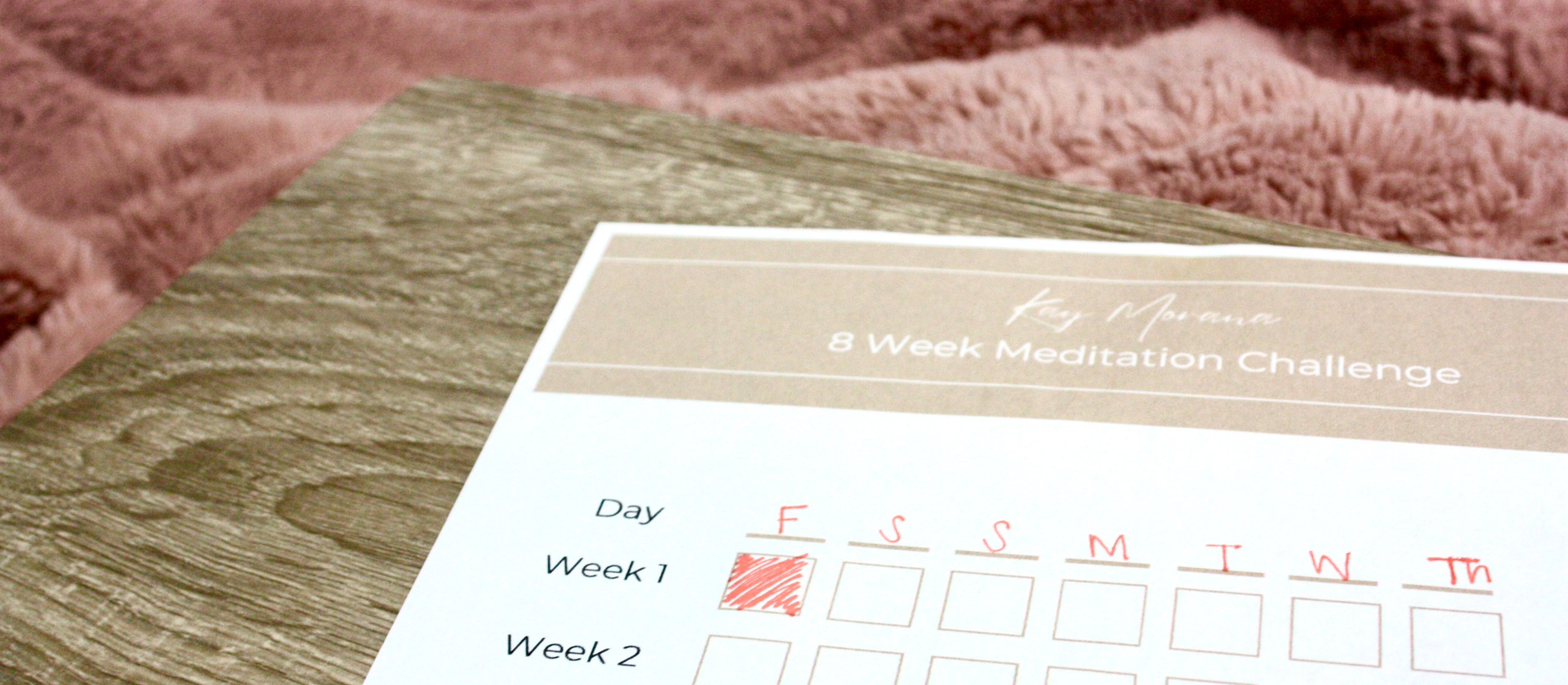
Recently I began taking The Science of Well-Being, a class offered by Yale that dives in to the science behind happiness. Over and over again, meditation was brought up as a way to enhance happiness.
Meditation gets a mixed rep sometimes.
I think we all understand that meditation has at least some benefit, right? If you don’t, a simple Google search will give you a million or more resources on the positive impacts of regular meditation.
The thing is, it’s intimidating.
Why We're Intimidated by Meditation
The unfortunate thing is, most people have this perception of meditation and what it has to be. Have a conversation with someone about why they don’t meditate: “it’s so boring” or “my mind won’t stop wandering” are likely one of the first things they’ll say.
I’ve meditated on and off for years, so I’m familiar with the barrier to entry. I’ve had these same concerns. There are a lot of misconceptions as to what meditation is, but the reality is there are MANY ways to go about meditation.
You can embrace the stereotype and focus on breathing, utilize guided meditations, embrace loving-kindness towards yourself & others, you can even walk!
I’m sure if you asked someone with a more scholarly background in meditation, they’d tell you there are certain categories you have to adhere to. In my opinion, meditation really boils down to practicing focus. At the end of the day, whatever technique you use to do that is valid.
(If you’re interested in reading about a variety of techniques, check out this link!)
For myself, I find I have the hardest time building the habit more than anything else.
So I’m committing to the next 8 weeks.
I have a few goals, however. So let’s get intentional.
Getting intentional
One thing about goal setting: it’s essential to get specific and intentional about goals.
Take a minute to think about yours:
- What do you hope to gain from meditation?
- How would you like to feel at the end of this challenge?
- Is there a type of meditation could help you be more successful in your goals than others?
Here’s why I’m building a meditation practice:
I want to build better coping skills for when my anxiety hits, and I want to feel less anxiety overall. I also want to improve my ability to focus.
I get distracted easily, so if I can get to a point where I can focus for 30 minutes at a time, that would be a huge win! In the past, I’ve kept the vast majority of my meditations to about 10 minutes. That’s why I’ve set another goal: I’m working my way up to 30 minute daily meditations.
This leads me to the next two things I want you to consider:
- How long do you want to spend meditating?
- What time of day do you want to meditate?
- How will you handle missed meditations? (This one is important!!)
I’m building from a starting point of 15 minutes each day, adding 5 minutes every 2 weeks until I hit 30. I’d prefer to meditate first thing in the morning, so I need to make sure I’ve got alarms set/clothes set out so I can get up and make that happen.
It’s inevitable that I’m going to run into a situation where I either forget or can’t meditate for whatever reason. A contingency plan is always important for these situations.
I’ll be giving myself 2 “freebies” for the first 8 weeks. That way, if I miss a day, it’s not a huge deal. After I’ve used my 2 freebies, if I miss a day, I’ll need to make it up the next day by either adding 15+ minutes to my meditation or doing a second 15 minute meditation.
Tracking the Process
I live for a good tracking sheet. I’ve created one that I’d like to share with you to track your own meditations!
If you’d like to follow the same process as me for the first 8 weeks, download this sheet. I’ve also created a second sheet so you can adjust the times however you’d like.
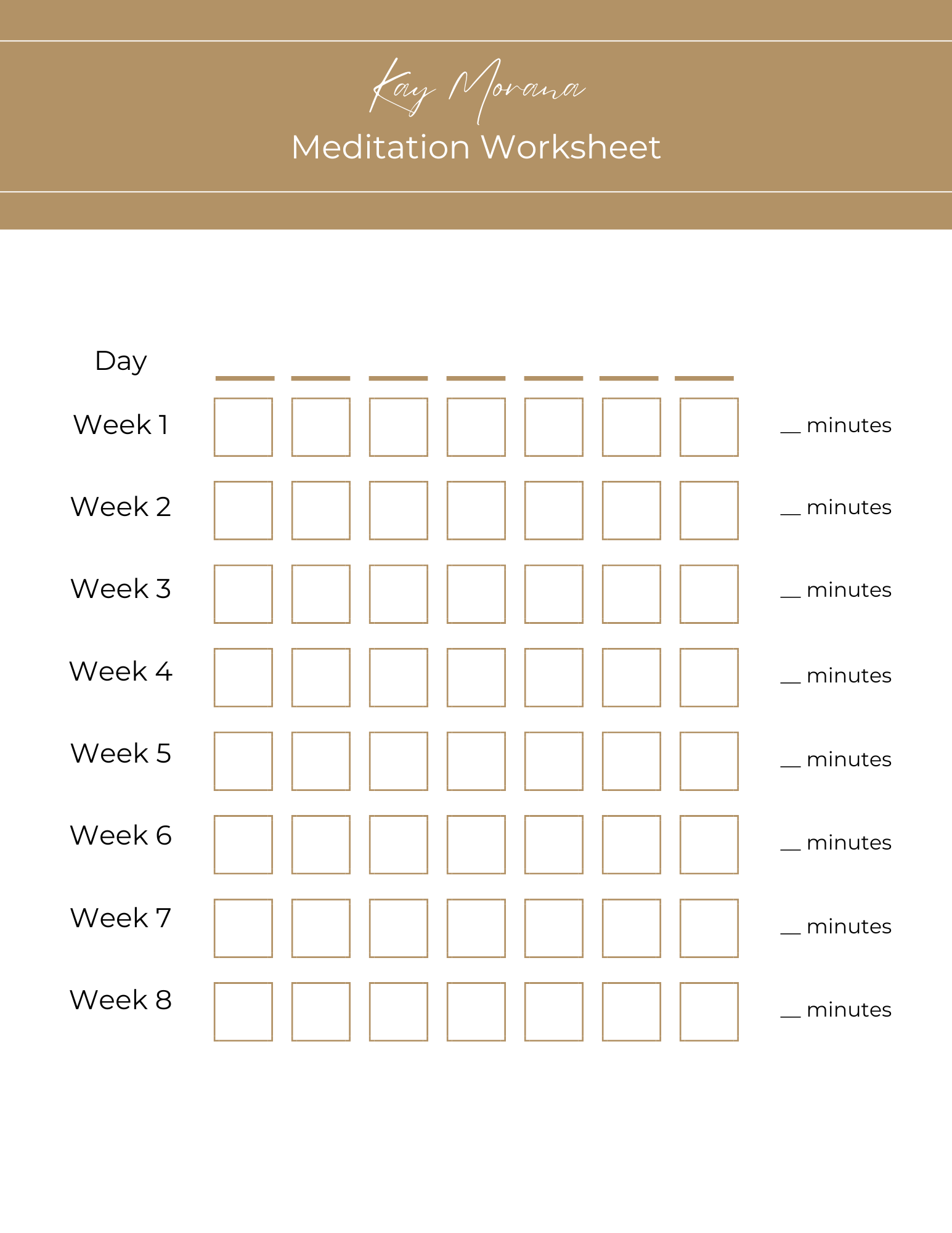
Tracking your goals and making them visible gives you a way to hold yourself accountable and build motivation as you make progress every day. I know I, for one, am excited to fill in each box on the worksheet!
I’ll also be updating my progress each week, & sharing a little bit about how I’m feeling mentally and physically as I go through this process. If you feel like joining me on this journey, feel free to leave a comment with your experience each week!
How to Start Meditating
There are honestly more options than you’ll probably know what to do with when you start meditating. While I love using an app like Calm or Headspace (both of which have awesome trackers as well!), there are some fantastic free options as well.
YouTube has essentially every meditation you can imagine, many of which do not have ads. If you like a guided meditation, my favorite channel is Great Meditation.
One of my favorite guided meditations of all time is Bob Proctor’s Abundance meditation. I genuinely feel like I’m being hypnotized every time I listen to it!
If you prefer less guidance, you can also check out frequency meditations. A quick search on YouTube will give you lots of options. When I’m feeling the desire for less guidance, I like to pick a frequency that seems related to whatever I’d like to meditate on and go from there.
Let’s get started!
8 weeks.
That’s only 2 months, 15-30 minutes a day to build a strong meditation habit. That’s about 1600 minutes, almost 27 hours to improve memory, reduce stress, improve sleep and general happiness.
While I hope I’ll maintain this habit for much longer, 8 weeks feels like a manageable goal for me, while also giving me enough time to see what the actual impact will be of consistent meditation.
I hope you join me as I document this process. I’m starting today, and I’ll update you weekly. Let’s see how good things can get with a small amount of time!
With love,
